
Colorado Now Offers Paid Leave for Parents of NICU Babies
A 2026 Win for Women: Parents of NICU Babies Now Supported Through FAMLI
One WFCO Donor Shares How the Law Would Have Helped Her Family
When a baby is born early or critically ill, families are thrust into two frightening and unfamiliar realities: a health crisis and a financial one. Neonatal intensive care units (NICU) are places of extraordinary skill and care—but they are also places where parents are making impossible calculations about money, work, recovery, and survival. For women especially, those calculations often mean shouldering physical recovery, disproportionate caregiving, and lost wages at the same time.
Colorado has just made huge step to change that by expanding its FAMLI program to support parents with newborns receiving intensive care. The Women’s Foundation of Colorado and many legislative partners advocated for the passage and expansion of FAMLI.
What is Colorado’s new NICU paid leave policy?
Beginning Jan. 1, 2026, families with newborns in intensive care can receive:
- Up to 12 weeks of paid leave during the hospital stay (Neonatal Care Leave), and
- An additional 12 weeks of paid bonding leave after discharge through FAMLI Bonding Leave
This policy makes Colorado the first state in the nation to create a dedicated paid leave category for neonatal intensive care—filling a major gap in the national paid leave landscape and progress for the economic advancement of women and families.
Why NICU paid leave matters for women in Colorado
Across the U.S., preterm birth rates and NICU admissions are rising. Colorado has experienced an 11.2% increase in preterm births since 2016, with over 5,900 babies born early in 2023.
Women are disproportionately impacted because they are:
- Recovering from childbirth or surgery
- Managing medical decisions
- Providing the majority of caregiving
- Losing wages or jobs when leave is unpaid
In the first year of FAMLI, more than 60% of claims were submitted from Coloradans identifying as women—for pregnancy, recovery, caregiving, and domestic violence leave. Neonatal care leave strengthens this safety net for growing families.
Farra’s story: when birth turns into crisis overnight
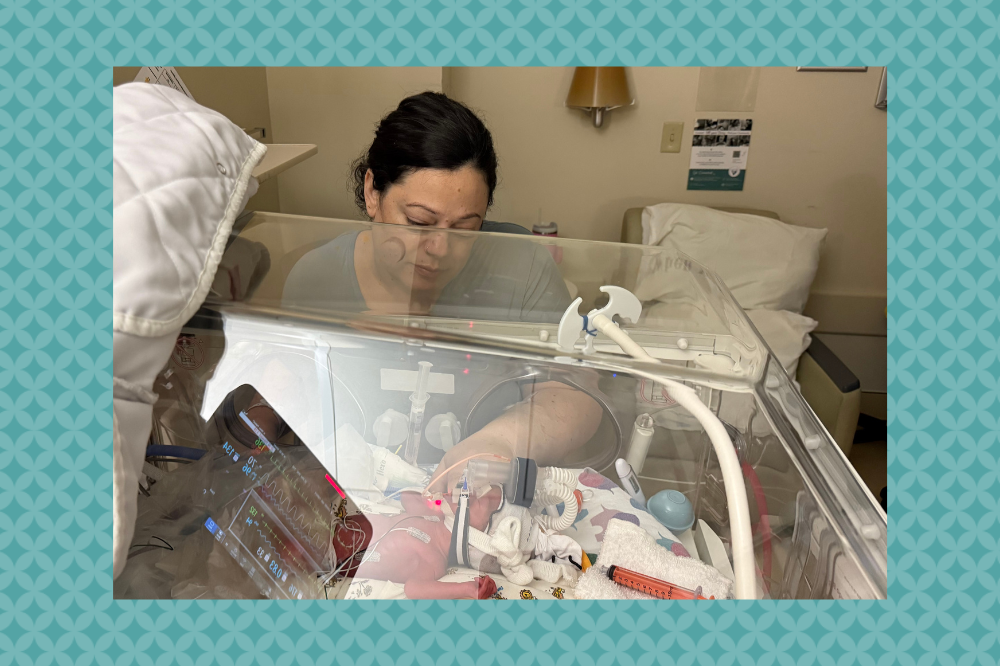
 WFCO donor Farra Lanzer-White of Fort Collins knows how beneficial FAMLI’s expansion is. Farra’s pregnancy journey began with IVF—already physically and emotionally demanding. At five weeks pregnant, she woke up covered in blood and learned she had a subchorionic hematoma. The bleeding and uncertainty continued until 21 weeks.
Just when she thought she was out of the woods, at 28 weeks, doctors discovered that her placenta wasn’t providing enough nutrients and her baby had fallen to the first percentile for growth. Soon after, Farra developed HELLP syndrome, a life-threatening hypertensive disorder. She was rushed to the ICU.
Doctors told her plainly: without delivery, both she and her baby were at risk.
At 29 weeks and one day, Olivia was born via emergency C-section at 2 pounds, 4 ounces and 14 inches long. Olivia went straight to the NICU. Farra remained in the ICU and wasn’t able to see or hold her baby for 24 hours. When Farra was discharged later that week, she had to leave the hospital without her child and begin a grueling daily commute back and forth to Anschutz Medical Campus in Aurora though eventually Olivia was transferred to Poudre Valley Hospital in Fort Collins.
Olivia spent 76 days—nearly 11 weeks—in the NICU.
The impossible choice parents of NICU babies face today
 Farra’s employer was compassionate, but the only option they could offer for extended time off was unpaid leave. That wasn’t possible for Farra and her husband. So she set up a complete workstation in Olivia’s NICU room and worked from her daughter’s bedside—recovering from surgery, pumping, commuting, and preparing for her own major heart surgery brought on by pregnancy complications.
“I was not a functioning human,” she said. “We were just surviving.”
Midway through Olivia’s NICU stay, she heard the news about Colorado’s new leave.
“What a fantastic law. I’m so proud of our state. It would have changed everything for us.”
“We would have been able to focus on bonding with our baby without the added pressure of work,” said Farra. “I was lucky to be at the hospital every day but I was working. My husband is a welder so he was not able to just work from the hospital like I was. It would have been so helpful for us to have work off the table.”
Today, Olivia is 7.5 months old and has been home with Farra and her husband for five months. She is thriving and Farra is feeling tremendous relief after a highly traumatic experience for the whole family.
Fast facts About Paid Leave for Parents of NICU Babies
When does the Neonatal Care Policy start? January 1, 2026
How much paid leave is available? Up to 24 weeks total (12 NICU + 12 bonding)
Who qualifies? Parents of infants receiving intensive or specialized neonatal care
Where do parents apply? myfamliplus.state.co.us
A win for dignity, health, and economic equality
For Farra, NICU leave would have meant time to heal, time to bond, and time to focus on survival—not paperwork and paychecks. For thousands of women to come, it represents maternal health protection, infant health and bonding, economic stability, and gender equity in caregiving and work.