
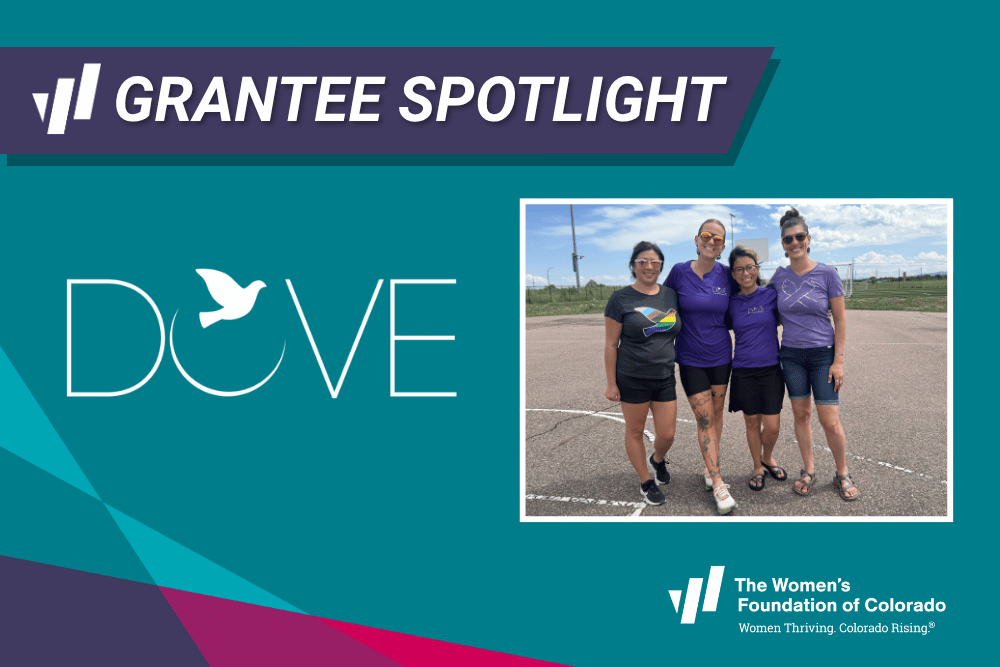
A Culturally Specific Support Program for Victim Survivors of the Deaf Community
“Everyone Deserves Voice and to Be Heard”
Established in 2000, Deaf Overcoming Violence through Empowerment (DOVE) is a nonprofit providing advocacy services for Deaf, DeafBlind, DeafDisabled, or Hard of Hearing (DDBDDHH) victims and survivors of domestic violence, sexual assault, and other forms of abuse in Colorado.
DOVE is vital to this marginalized and underserved community because it recognizes that a one-size-fits-all approach to violence prevention and survivor support is insufficient. By providing culturally and linguistically specific services, DOVE not only helps individuals escape dangerous situations but also works to dismantle the systemic barriers that perpetuate violence in the DDBDDHH community.
“Intersections of domestic violence for deaf people are very different than people in the hearing community. Deaf individuals are 2.5 times more likely to experience violence,” said Executive Director Sabrina Roult. “This is due to disability and people take advantage of that.”
Roult blames a fundamental lack of accessibility and cultural understanding. “The system as a whole does not provide appropriate accommodation or access for deaf individuals,” Roult said.
By bridging the communication and bringing an understanding of cultural nuances of the DDBDDHH community, DOVE empowers survivors to navigate complex systems, find healing, and build a life of safety and independence.
With DOVE, Survivors Can Express Themselves In Their Primary Language
In a close-knit community where many people know one another, there’s a heightened fear of confidentiality breaches and social isolation. Survivors may also feel a deep-seated mistrust of systems that have historically been inaccessible to them. DOVE’s culturally specific approach builds trust by providing services delivered by individuals who understand these cultural dynamics and can navigate them with sensitivity and respect. This ensures survivors not only have access to resources but also feel safe, seen, and truly supported.
“Everyone deserves voice and deserves to be heard, regardless of whether it is through a spoken language or a sign language. That’s why we created a space so survivors can feel like they can express themselves in their primary language and the support that they need,” Roult said.
The Women’s Foundation of Colorado (WFCO) funds DOVE through our WINcome grantmaking program. This collaboration is rooted in WFCO’s mission to advance economic security and equity for all women in Colorado, particularly those facing the steepest barriers due to their identities. DOVE’s specialized services, which include providing fluent American Sign Language (ASL) interpreters and culturally sensitive advocacy, align with WFCO’s goal of ensuring that all women have access to the resources they need to thrive.
Furthermore, there is a systemic misunderstanding of Deaf culture. The DDBDDHH community is often close-knit, and this can be misconstrued by outsiders as an insular or secretive environment. Behaviors that are part of Deaf culture—like direct communication or a strong sense of community—can be misinterpreted as signs of manipulation or social isolation, further complicating a survivor’s ability to seek help without judgment.
Isolation, Miscommunication, and Mistrust of Systems Are Prevalent
 A primary obstacle DDBDDHH individuals face in seeking help from mainstream services is the lack of American Sign Language (ASL)-fluent staff and interpreters. Mainstream organizations often rely on interpreters who may not be skilled in the nuances of trauma-informed care or the specific vocabulary needed to discuss sensitive topics. Critical miscommunications can result where a survivor’s experience is misinterpreted, or their needs are not fully understood.
This can lead to a sense of powerlessness and reinforce a historical mistrust of systems that have long been inaccessible. Consequently, many survivors choose not to report abuse or seek medical attention, leaving them vulnerable to continued harm.
However, Sinden, a survivor, felt empowered to reach out to DOVE to address a cycle of physical, emotional, and financial abuse she experienced in her first and second marriage. “(The team at DOVE) taught us how to put our emotions and thoughts into other things so awful things do not keep festering in us,” she said. “It gave us the willpower to keep on pushing and not to give up.”
A Comprehensive Suite of Services Designed to Meet the Unique Needs of DDBDDHH Survivors
DOVE provides a comprehensive suite of services specifically designed to meet the needs of DDBDDHH survivors, including:
- A 24/7 Crisis Hotline, which utilizes video phone technology to ensure immediate communication in American Sign Language (ASL), bypassing the delays and misunderstandings of traditional phone systems.
- Specialized Deaf advocates who assist survivors in navigating complex systems, including the legal system, by attending court hearings, helping with restraining orders, and finding safe and accessible housing.
- Community education, raising awareness about domestic and sexual violence within the DDBDDHH community, and training mainstream hearing service providers on cultural responsiveness and effective communication. Resiliency programs offer ongoing support, such as support groups and workshops, to help survivors in their long-term healing journey.
Cash Assistance Offers Flexibility to Pay for Food, Gas, Mileage, and More
Additionally, DOVE is able to provide cash assistance for necessities such as gift cards for food, rent support, and transportation that is made possible with help from The Women’s Foundation of Colorado’s WINcome funding.
Most state, local and federal grant money restricts where dollars can go, Roult said. These funds can’t pay for food expenses, gas cards, or mileage reimbursement, or the costs of services such as removal of tattoos.
“I was able to get the ‘branding’ (tattoos) of the abusers name off of me for free by laser removal. DOVE found a place, reached out to them and sent me there and also got me bus tickets to get out there to those done,” Sinden said.
The unrestricted funding DOVE received from WFCO most recently through its Catalyst Fund was used for survivor emergency relocation support for a survivor, her daughter and two cats, who experienced domestic violence and stalking.
“It was a terrible system and it had no way to protect them. They had to leave,” said Roult. “DOVE was able to use it for emergency hotel stay, flights, cats’ vet bills, prepared documentation and update immunizations.”
Other expenses included relocation fees and some legal fees that were accrued, totaling $7,500.
Where Programs for DDBDDHH Survivors Are Limited, DOVE Fills A Critical Gap
Sinden advises, “Trust that DOVE will be there to be of assistance. We will survive and grow and to heal! And to live our life to our fullest without having to deal with frustration fear, and hesitation.”
Sinden’s story highlights how DOVE’s culturally specific approach not only provides essential services but also restores a sense of dignity and trust for survivors who are in the fight against gender-based violence. The organization’s collaborative spirit extends this impact by building strong partnerships with organizations, such as WFCO, to ensure a comprehensive network of support.
“I’m here in my beautiful new home safe and sound and am learning to be happy, but that’s quite a journey in and of itself. But in due time I will be back to being myself again, happy, and most of all, secure. Honestly DOVE did their ABSOLUTE best with their abilities to help us survivors,” said Sinden about where she is today. “I will be getting another divorce filed and I’m pretty sure I have questions on how to navigate this court system yet again. But with confidence in knowing that DOVE will be of help again.”
Marking An Important Milestone
By supporting DOVE, you directly contribute to a movement that ensures no survivor is left behind due to communication barriers or cultural misunderstandings.
“This year is our 25th anniversary,” said Roult. “It’s a big milestone for us. Nationwide, there are probably 10 deaf-founded and deaf-run programs, specializing in domestic violence in 50 states.”
For immediate support, the DOVE staff are available 24/7 via a hotline at 303-831-7874.